Geography
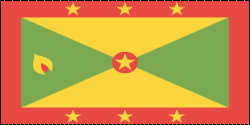
Grenada (the first “a” is a long vowel) is the most southerly of the Windward Islands, about 100 mi (161 km) from the Venezuelan coast. It is a volcanic island traversed by a mountain range, the highest peak of which is Mount St. Catherine (2,756 ft; 840 m).
Government
Constitutional monarchy. A governor-general represents the sovereign, Elizabeth II.
History
The Arawak Indians were the first to inhabit Grenada, but they were all eventually massacred by the Carib Indians. When Columbus arrived in 1498, he encountered the Caribs, who continued to rule over the island for another 150 years. The French gained control of the island in 1672 and held on to it until 1762, when the British invaded. Black slaves were granted freedom in 1833. After more than 200 years of British rule, most recently as part of the West Indies Associated States, Grenada became independent on Feb. 7, 1974, with Eric M. Gairy as prime minister.
In 1979, the Marxist New Jewel Movement staged a coup, and its leader, Maurice Bishop, became prime minister. Bishop, a protégé of Cuba's President Castro, was killed in a military coup on Oct. 19, 1983.
Sovereign: Queen Elizabeth II (1952)
Governor-General: Sir Daniel Williams (1996)
Prime Minister: Tillman Thomas (2008)
Land area: 131 sq mi (339 sq km)
Population (2010 est.): 107,818 (growth rate 0.5%); birth rate: 17.2/1000; infant mortality rate: 11.7/1000; life expectancy: 72.8; density per sq km: 262
Capital and largest city (2003 est.): St. George's, 4,300
Monetary unit: East Caribbean dollar
Languages: English (official), French patois
Ethnicity/race: black 82%, mixed black and European 13%, European and East Indian 5%, and trace of Arawak/Carib Amerindian
Religions: Roman Catholic 53%, Anglican 14%, other Protestant 33%
National Holiday: Independence Day, February 7
Literacy rate: 96% (2003 est.)
Economic summary: GDP/PPP (2009 est.): $1.15 billion; per capita $10,800. Real growth rate: –4.0%. Inflation: 3.7%. Unemployment: 12.5% (2000). Arable land: 6%. Agriculture: bananas, cocoa, nutmeg, mace, citrus, avocados, root crops, sugarcane, corn, vegetables. Labor force: 42,300 (1996); services 62%, agriculture 24%, industry 14% (1999 est.). Industries: food and beverages, textiles, light assembly operations, tourism, construction. Natural resources: timber, tropical fruit, deepwater harbors. Exports: $38 million (2006 est.): bananas, cocoa, nutmeg, fruit and vegetables, clothing, mace. Imports: $343 million (2006): food, manufactured goods, machinery, chemicals, fuel. Major trading partners: Saint Lucia, U.S., Antigua and Barbuda, Saint Kitts and Nevis, Dominica, Trinidad and Tobago, UK (2006).
Member of Commonwealth of Nations
Communications: Telephones: main lines in use: 27,700 (2006); mobile cellular: 46,200 (2006). Radio broadcast stations: AM 2, FM 1, shortwave 0 (1998). Television broadcast stations: 2 (1997). Internet hosts: 7 (2007). Internet users: 19,000 (2003).
Transportation: Railways: 0 km. Highways: total: 1,127 km; paved: 687 km; unpaved: 440 km (1999 est.). Ports and harbors: Saint George's. Airports: 3 (2007).
International disputes: none.
|